AI Systems
What does an AI automation consultant actually do?
A good one audits how your business runs before touching any AI. The more involved ones then build targeted systems, one at a time, to take work off your team.

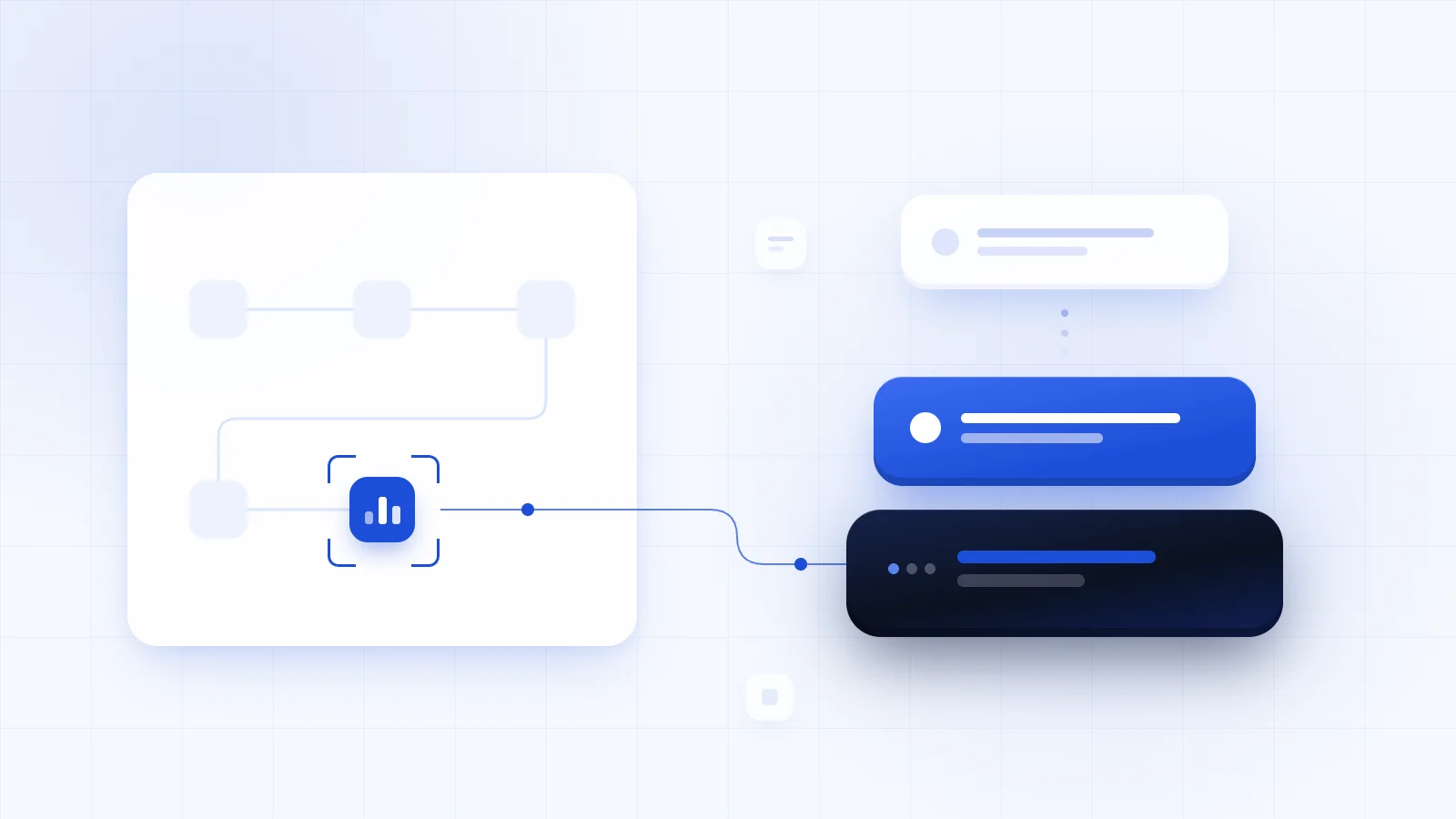
In short, an AI automation consultant studies your business, finds where it's inefficient, and uses that to build more efficient systems, with AI doing the work. What you get depends on the consultant: some stop once the plan is written, while others build the systems and keep them running for you. Here's the whole job, from the first look at your business to a system running inside it.
What does an AI automation consultant do first?
An AI automation consultant starts by doing nothing with AI at all. The first job is an audit: learning how your workflows run, which tools your team relies on, and how people actually move between those tools and processes in a normal week.
The audit shows where time is being lost. A good consultant also arrives with a feel for where AI saves time easily, and for the tasks nobody on your team should really be doing by hand. Everything after this is built from that picture.
What happens after the audit?
Once the audit is done, the consultant goes through it with you, or whoever makes the decisions, and you agree which part matters most to the business. That's where the work begins.
Before any system goes in, there's groundwork. The goal is a business that runs more natively on AI, and that needs a few layers under it first (they're covered in the next section). With those in place, the consultant maps the workflows in the part you've chosen and trains the AI on the jobs it will take over.
This is the point where consultants split. One who strictly consults will help you write the plan, perhaps the implementation plan too, and leave the building to someone else. The consultants and engineers who get more involved go on to roll out one system at a time. They walk your team through how each part is automated, take your feedback, and check the output is what you expected and actually works.
What foundation does a business need before AI?
That depends on how far you want to take AI.
At the simple end, it's about linking up the software that has to do certain jobs without a person stepping in. In our work, the most common way to do it is with MCP connectors: add-ons built on an open standard called MCP, which, as of 2026, let an AI tool read from and work inside your other software. We keep our own list of the ones we recommend, for everyday tools and for AI workflow tools.
Alongside that sits a knowledge hub, somewhere AI can look up what it needs to know about your business. Say you want customers to hear back faster. An AI bot can only help if it has learned what you offer and charge, how the business does things, how you talk, and how you fix the problems customers raise most, so that information has to be gathered where the bot can read it.
A consultant whose aim is to make your business fully AI native goes further and starts with an AI operating system, which is really your business's AI brain. Building one means:
- Writing the context files. These are plain text files (Markdown, or "MD", files) that hold what the AI should know about your business.
- Keeping that context in one home. It's given a clear structure and a single central place where all of it lives.
- Putting everyone on the same system. Everyone involved works from one AI setup and the same set of context folders.
- Letting it learn as it goes. Each interaction adds to what the AI knows about your business, so it gets better and better over time.
That suits a business that wants its results to keep improving and compounding. If you just want a few repetitive problems gone, you don't need to go that far. Still, it's where a consultant can add real value, getting your team ready to work as an AI-native business, and the groundwork takes real effort.
What jobs can an AI automation consultant take off your team?
The list is long, but a few jobs come up again and again.
- Running the CRM. Many sales teams are notorious for letting the CRM go stale. An agent working in the CRM can tell your team which leads are hot, who's due a follow-up and what's on each person's list, so it doesn't depend on anyone remembering to update it.
- Customer service and new enquiries. A chatbot or customer service agent on your website can answer a good share of what comes in, which frees up a lot of your team's time. The same goes for new enquiries, whether they come through a form, an email or the chatbot.
- Monthly reports. Certain reports, financial or commercial, are another job AI does very well each month. If you'd rather keep it light, a consultant can help you set up standard reports that AI fills in automatically. If you want more, they can build an agentic workflow, where AI works through the steps itself, to write reports that draw context from a wider set of data.
We take our own work from the audit right through to the build, so here's one we built.
Say your CRM has been left aloneOne client's CRM was full of records and good leads, but the sales team only chased them when they had a spare moment, and nothing held anyone to account or kept deals moving. We built a CRM agent to run the job from start to finish. It handled the replies to outbound campaigns and the enquiries coming in, created each deal, placed it in the right stage and kept the engagement log filled in, so anyone could see how a lead had engaged. It flagged deals as overdue when they needed chasing, working from everything it had already recorded, and sent those reminders on Slack and by email. In a way, it was a self-sustaining AI employee for the CRM.
For the sales team, that meant chasing people at the right time with the right information. Less time was wasted, people managed their own pipelines better and closed more deals, and the business saw more revenue on the bottom line. Speed to lead got better too: the agent treated every new enquiry as urgent, so it was answered straight away and nothing was really left on the table.
What doesn't an AI automation consultant do?
An AI automation consultant won't glance over your business once, write an AI agent and set it loose on everything. That's the wrong thing to expect, and I think that's probably where people's expectations go wrong.
It's also less glamorous than most people imagine. Forget the picture of fancy digital employees with minds of their own, each running off and handling everything. The work is far more targeted: each system, like that CRM agent, is aimed at solving a particular problem. AI that can reason about context is used where it's essential, as it was in the CRM agent we built, which worked out when each deal needed chasing, but not everywhere, because that reasoning comes at a cost.
Do all AI consultants build the systems?
No. AI consultants vary a lot in how much they take on. Some are light touch and mostly about information, pointing you in the right direction on how to use AI. Others, like us, work end to end: they advise on becoming an AI-native company, help put the systems in and guide you the whole way. If you're weighing up the two kinds of firm, and what drives the cost of each, our piece on choosing an AI consultant or an AI automation agency covers it.
For us, working end to end doesn't stop at launch. We also work as an extension of each business, as its AI builders. We run and maintain the systems, make sure what they produce is usable by everyone on the team, and support the team as they use it. A lot of what an AI automation consultant helps with is exactly that.
What does the business owner have to put in?
Mainly, time for the audit. You walk the consultant through how the business works and give them enough access to learn it properly, almost as if they were inside the business. The more access you give, the better the results.
After that, feedback. A consultant like Trigger AI works with lots of different businesses. We're experts in AI and automation, but we're not experts in everyone else's business, so we rely on you to keep telling us how things are running. That's how each system gets refined until it works better for you.
That's really all. Time given at the start matters most: the more of it you put in up front, the easier it is for us to work independently and keep delivering strong results and real value over time.
Callum is a marketing and ops leader who has built and scaled multichannel campaigns generating over $10m in ARR across international markets. He is the systems architect behind every Trigger AI build, turning strategy into automations that actually run.