AI Systems
AI Agent vs Automation, which is best?
Needs judgement? Use an AI agent. Same every time? A simple automation will do it cheaply. More often than not, that's what owners asking us for an agent need.

A lot of owners come to us asking for an AI agent. More often than not, what they need is a simple automation. You can tell which by asking whether anything in the task needs deciding.
What does an AI agent add that an automation can't?
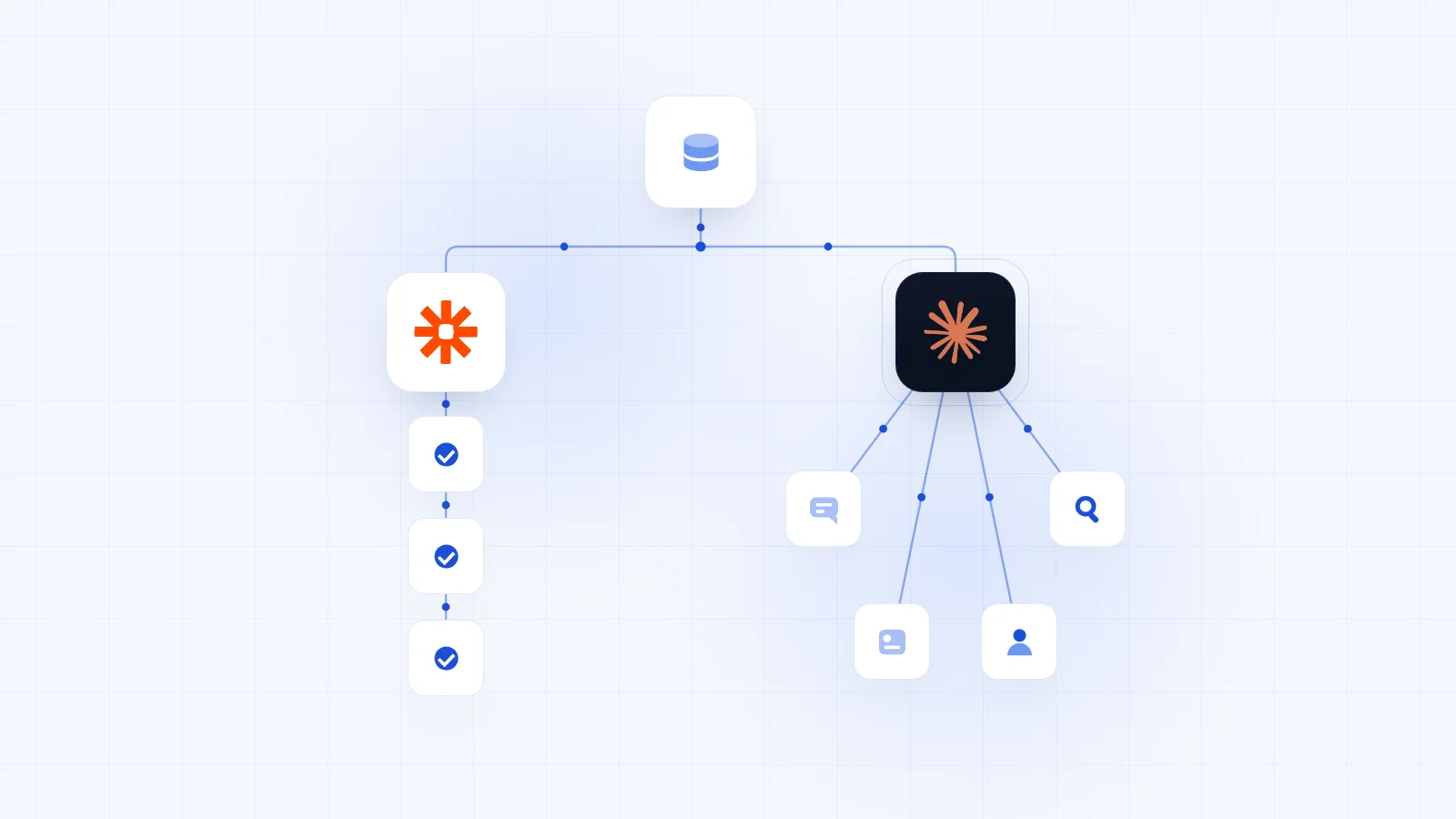
Judgement. An automation follows the steps you set, and it's the better tool when the work doesn't change. An agent adds a layer of reasoning on top. Give it enough context about your business and enough freedom, and it works out the answer itself, the way an employee would.
Three questions tell you which one a task needs:
- Does the input always arrive in the same structure? An enquiry form with fixed fields does. A free-text message that could ask anything doesn't.
- Could you list every possible outcome in advance? If the answer is always one of a handful you already know, nothing needs evaluating.
- Would a person need their own judgement to get it right? If yes, that's the job an agent is for.
Does a new enquiry need an AI agent?
Put those questions to a job almost every business has, a new enquiry coming in, and the answer is that it depends on what you want done with it and what people send you.
If you just need to know an enquiry came in, or want it added to your CRM as a new deal, an automation tool like Zapier or Make will handle it cheaply and identically every time.
If your enquiries are all over the place, some asking very specific questions and some asking things you'd never have predicted, an agent can take the job on. It reads each one, works out the answer and weighs it against what it knows about your business. That's where an agent genuinely becomes an additional employee, and where it gives you the most value.
Where does an automation stop and an agent start?
At the first step that needs a decision. Say you're running a LinkedIn campaign and someone replies.
One thing you might want is to be told about it. A notification like that is a job we'd always build as a plain automation. It needs only a few details, always the same: who replied, ideally their company, and what they said.
You might also want more done with it: the right action taken in your CRM, the right person alerted to handle it (not always the same one), a response drafted back to the lead, and a few angles for the conversation from research on their website. Each of those takes some evaluating, which the notification never needed, and that's where an agent comes in. It's the work you'd do yourself if you had the time, and the kind of job agents are really good for, as long as the cost is justified.
How do you know an agent is worth paying for?
Test it before it goes live. An agent costs a lot more to run than an automation. It researches, weighs things up and keeps going until it's done the job you gave it, and all of that uses tokens, the units AI providers charge by. Its cost can also vary a lot between runs, and you can never really predict it unless the agent is built and trained very precisely.
Run a handful of controlled examples through it, watch how it behaves, and see what each run costs. Then ask the two questions we ask every time:
- What does it cost to run?
- What is the output worth? A marginal improvement, or more than that?
You might expect the risk to be an agent that breaks or needs constant fixing. In our experience that's rare: agents are generally reliable, need little upkeep and are easy to improve as you go. The real risk is paying a lot for output the task never needed.
Why do so many owners ask for an agent they don't need?
Because it sounds good. An AI agent sounds like an incredible, mysterious thing that will solve all your problems, which is why it matters so much to be clear about what one actually does. Most of the time, an owner doesn't want complex reasoning for the job they bring us. They simply want to be rid of it.
Sometimes, though, seeing what an agent can really do changes the conversation completely. The owner wants to spend the money on it, because it does things a simple automation can't and gives them back a lot of time.
That's why we take it case by case: look at the situation, set out the options and the pros and cons of each, and guide the owner to the one that fits. Treat an AI agent as a tool in your arsenal, not the solution to everything.
Callum is a marketing and ops leader who has built and scaled multichannel campaigns generating over $10m in ARR across international markets. He is the systems architect behind every Trigger AI build, turning strategy into automations that actually run.