AI Systems
How to use AI to find new clients
Everyone can pull the same list from Apollo or Sales Navigator. AI's job is the digging: cutting the wrong firms and finding the ones that need you right now.

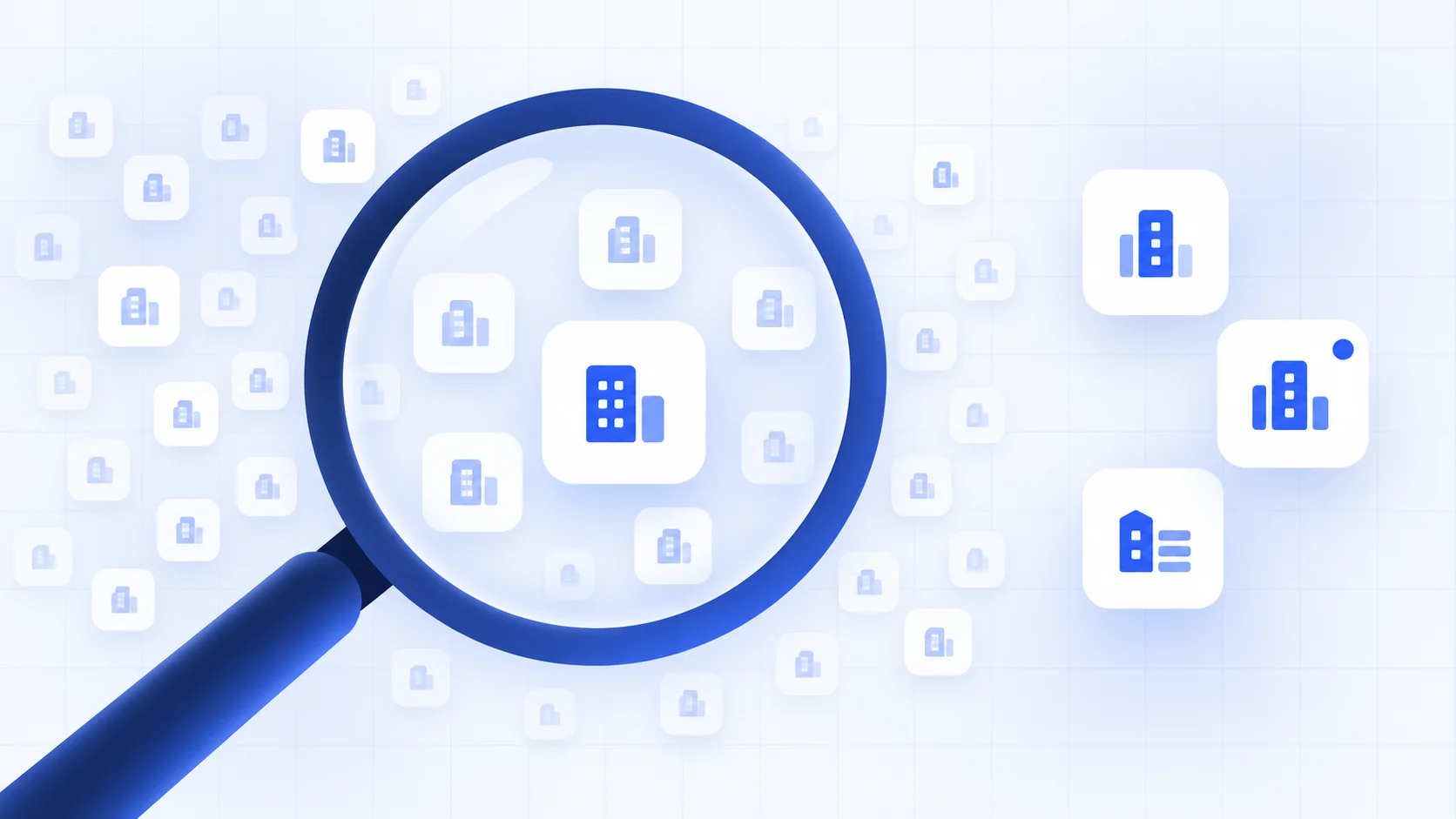
The tools most businesses use to find prospects, such as Apollo and LinkedIn Sales Navigator, are good at the heavy lifting: sourcing what we like to call a prospect universe, every company that could in theory buy from you. AI is what gets you from that universe to the companies that actually need what you offer. It does the digging and evaluation, in layers, and that's where you can get really far and really targeted.
Why isn't a list from Apollo or Sales Navigator enough?
Because every other business has access to the same tools you do. Apollo is a sales platform built around a large database of companies and contacts, and Sales Navigator is LinkedIn's paid search for sales teams. Anyone paying for either can pull much the same list, so outreach built straight off it is flimsy. The prospect can tell. It won't feel like a message you actually sent them, just one more in the crowd.
Think about your own inboxYou'll have had messages that make absolutely no sense for your business. You know from the receiving end how little they land.
The lists aren't flawless, either. Prospecting tools work partly from outdated information, so some companies on them aren't in the industry you searched for, and some aren't trading any more.
What does AI actually do to find the right clients?
It works in layers, each one slimming the list down so the next can go deeper. Before any of it runs, the part that needs your attention is the brief you give it: what your qualifying criteria actually are, and the key signals that tell you a business is a good fit for what you sell.
- Throw out the wrong businesses. This is the first place AI really pays off. It can quickly check whether each company is in fact in the industry you thought, whether it's still trading, and whether it's too big or too small for you. It can also clear out duplicates and, if you give it your existing records, anyone already in them. AI can take all of that early work off your hands, and you don't need to pay for another tool to do it.
- Collect the basics and pre-qualify. Next, it sweeps each company's website. In the UK, it can also pull the company's record from Companies House, the official register of UK companies, through its API. It works out how big the team is and checks everything against criteria you've given it, so it can help you rule out the companies that clearly aren't right, or potentially aren't.
- Research the companies that are left. With a slimmer list, you can really put AI to work. You can build AI agents to carry out tasks on their own, acting as researchers to look into specific points and facts about each business. You can tell them up front what to find, or let them research more broadly and fit the data they return to your prospect list afterwards. This is the layer that starts to shape who you target, and when.
- Find the right people to contact. Finally, AI helps you find the details of the people to reach, through a mix of tools and plain old research.
What counts as a buying signal?
A buying signal is something happening at a company that suggests now is a good moment to get in touch. Which ones matter varies with your sector, your industry and the product or service you offer. There are a lot of variables, and it comes down to what you judge to be a good signal for your business.
Let's use two basic signals to show how it works:
- A growing headcount. A company adding staff year on year is expanding, and you can draw some conclusions from that. A bigger team might need more training, for example, or, if you sell office equipment, more computers.
- Job ads. A company advertising roles is telling you which department it's hiring for. If that's a department where your business solves a problem, it's a good time to reach out. The problem is on their mind, and it makes sense for you to appear in their inbox.
Can you just use ChatGPT to find clients?
Once you know what you're looking for, the natural question is whether an AI like ChatGPT can do the looking. It can help with part of it. The distinction that matters is between using AI yourself and using agents. Both are AI, but one is a conversation and the other is set up to do a job on its own.
AI tools such as ChatGPT or Claude can do some of the early preparation. You can bounce ideas back and forth with it about who your best customers are and have it refine the framework you'll use to look for more like them.
Agents, like the researchers in the third layer above, are where you need a bit more knowledge, because you have to build them. There are many different ways to do it. Here are a few:
- Build one in Anthropic's Claude Console, which added an agent builder in April 2026, or as a workspace agent in ChatGPT on a Business or Enterprise plan.
- Run a research agent through an API call, a direct connection from your own systems to the AI provider of your choice.
- Spin up sub-agents inside a tool like Claude Code, Anthropic's coding assistant.
The right route depends on how your business already works. For a first-timer it gets a little complicated, as you'd expect with a new piece of technology. It's a lot of what we help business owners with: building them a team of agents to fit the way they work.
Is AI lead generation worth it, or a scam?
It's worth it when it's built properly: a set of fairly intricate engines, connected to one another and powered by AI, that sift a big list of companies in layers and research the ones that are left. That's where AI lead generation becomes really powerful, and where it becomes legitimate. Once you own a proper piece of infrastructure, built for you, it keeps feeding you strong prospects, a steady supply of the companies that suit your business.
It's a bit more questionable when it's a new, flashy tool charging a big fee, or a one-size-fits-all product that promises a bunch of qualified leads at the press of a button. It doesn't work that way, and it isn't that simple. Any company or software promising qualified leads from nowhere in a few clicks is almost always overstating it, if it isn't a scam, so be wary.
Callum is a marketing and ops leader who has built and scaled multichannel campaigns generating over $10m in ARR across international markets. He is the systems architect behind every Trigger AI build, turning strategy into automations that actually run.