GEO
GEO vs SEO: should you still pay for SEO?
Yes, if it's done well: SEO gives you a strong foundation to build GEO on. What's new is writing niche pieces from your expertise and getting named on other sites.


When people search for something specific, they still rely on the links in Google. So as long as your SEO is done well and cleanly, keeping it going won't hurt your chances of being cited by AI tools, which is what GEO is about. It gives you a strong foundation to build a GEO strategy on top of. What changes is what you write about, and who's talking about you.
Is GEO replacing SEO?
No. SEO, search engine optimisation, is the work of getting your pages into Google's results. GEO, generative engine optimisation, is getting AI chatbots such as ChatGPT to pick up your business and cite it when they answer someone's question. You'll also see it called AEO, for answer engine optimisation.
The evidence suggests GEO leans on a lot of the same underlying principles as SEO, and the two are intrinsically linked. They do have their differences, though.
What's the difference between GEO and SEO?
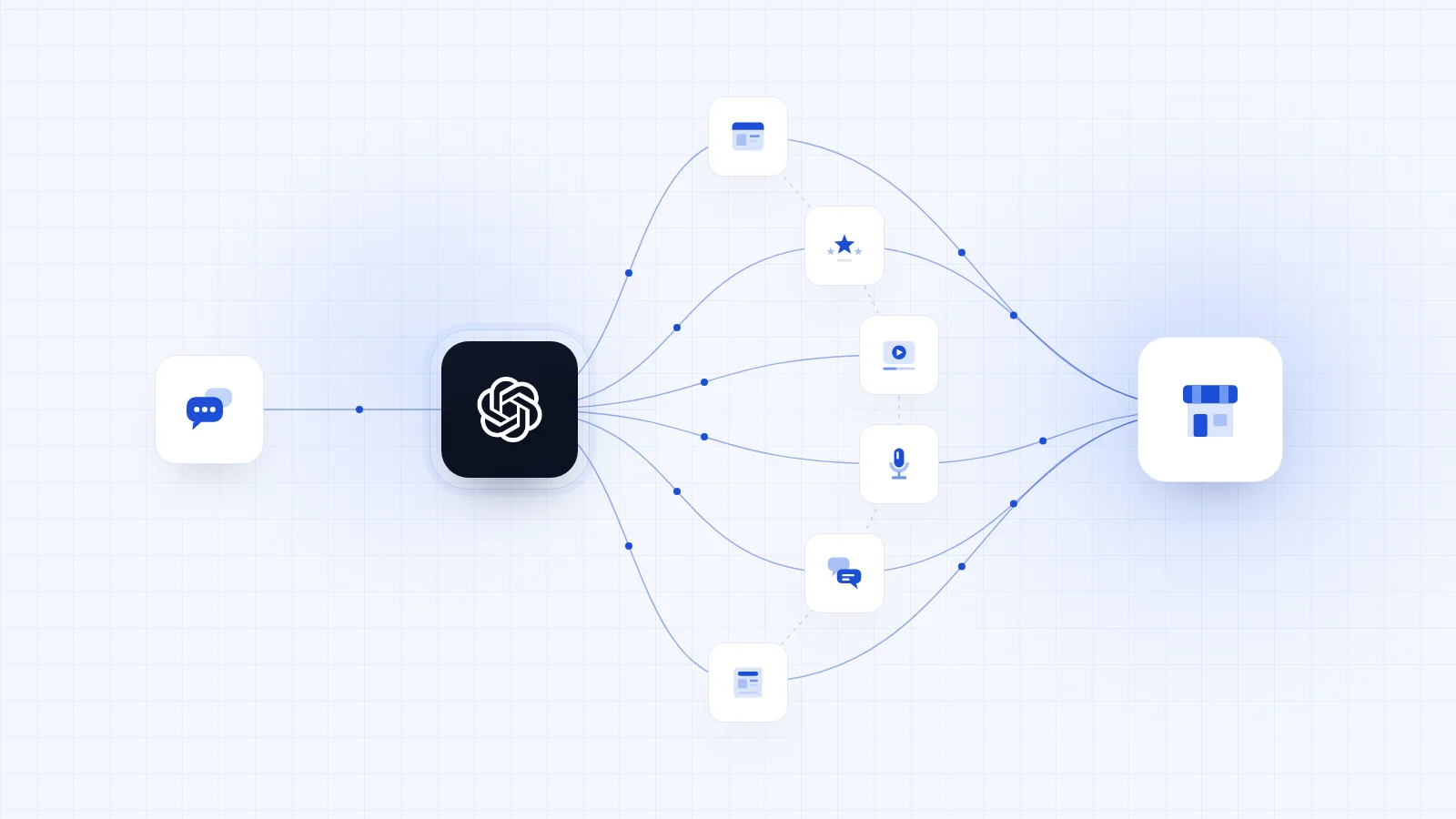
In our view, the biggest difference a small or medium-sized business should think about is fan-out queries. It's how an AI chatbot gathers information from the web before it answers: for one simple question, it often runs several related searches of its own, to collect as much as it can and answer properly.
Those searches usually aren't written the way a person would type them, and that's where the opportunity lies, because they give your business more chances to be found and used as a source. So write very niche, specific pieces that share what you know. The more niche a piece is, the less competition it has, so the AI has fewer sources to choose from and is more likely to use you.
Say you're a nutritionistYou could write about something as specific as how eating broccoli affects digestive enzymes, and what that means for athletic performance. It's not a search that would normally do well in Google, but it's the kind of thing a fan-out query might pick up.
How do you find niche topics to write about?
The beauty of niche pieces is that finding them doesn't take a long round of keyword research. The main place to look is your own expertise. Everything is fair game now, and the job is to show you're an expert in your field. Think about the specific questions next to your business and what you sell that you can answer, then write up the answer and how to solve it.
Even so, turning what you know into a list of topics can be hard. At Trigger, we built our own content optimisation tool for exactly that. It works from your business, what you know and the questions your buyers ask, and turns them into next steps for your content.
Do links still matter for GEO?
They do, but for GEO I'd say links to your site don't matter as much as contextual mentions. A contextual mention is another site naming your business alongside the work you do. Every extra source that names you that way gives an AI more context, from other people talking about you.
Articles listing the "best [what you do] in [your country or region]" are a great place to be named. And you no longer need them to add a followed link, the kind search engines count, to your site. As long as they mention you, that's enough.
Your name needs to stand out, though. If it's easily confused with other businesses because the names are similar, it can be harder. So always put your name next to what you do, and try to describe that the same way everywhere, so it's clear and repeatable. There's more on getting named in how to get your business recommended by ChatGPT.
What's not worth your time or money?
Whether you're doing this yourself or being pitched it, here's what I'd look out for and ignore when it comes to SEO and GEO:
- A high volume of AI-generated content. Churning out lots of AI-written articles won't be rewarded. In fact, it'll be penalised, so steer clear.
- Too much focus on backlinks, if GEO is the goal. For AI answers, I'd put mentions ahead of links. But if you're still building your domain authority for SEO (SEO shorthand for how strong your site is, judged mostly by the sites linking to it), backlinks are still important. And domain authority matters for GEO too, which is where you can see how intrinsically linked the two are.
- Reworking your site especially for AI. Google's guidance, published in May 2026, says that for its own search and AI features you don't need to rewrite your pages for AI, and special AI files or markup won't help. It's a waste of your time.
- One-off AI rankings. AI tools, the prompts people use and the sources they cite all change from day to day, so this needs tracking daily, over time. If you only check once, you may as well not do it at all.
Where should a small business start?
Start by checking the basics. Look at Google Search Console, Google's free report on how your site does in its search, or a custom tool like ours, and see if you can spot some good opportunities. Then paste your site's address into whichever AI tool you use and ask it for a short, concise analysis. From there, set a plan: the content you'll create and the fixes you'll tidy up. And be patient with it.
With a bit more budget, and a wish to supercharge your growth, that's the time to look at a GEO agency that already has the whole framework modelled and a record of doing this before. It can really help you stand out.
Callum is a marketing and ops leader who has built and scaled multichannel campaigns generating over $10m in ARR across international markets. He is the systems architect behind every Trigger AI build, turning strategy into automations that actually run.